
OM AH HUNG
A Tantric Meditation

Welcome to The Lethargist Newsletter, where you will find my irreverent perspectives on religion, metaphysics, philosophy, psychology, science, and spirituality. Feel free to contact me by replying to any newsletter.
The Seed of Awakening
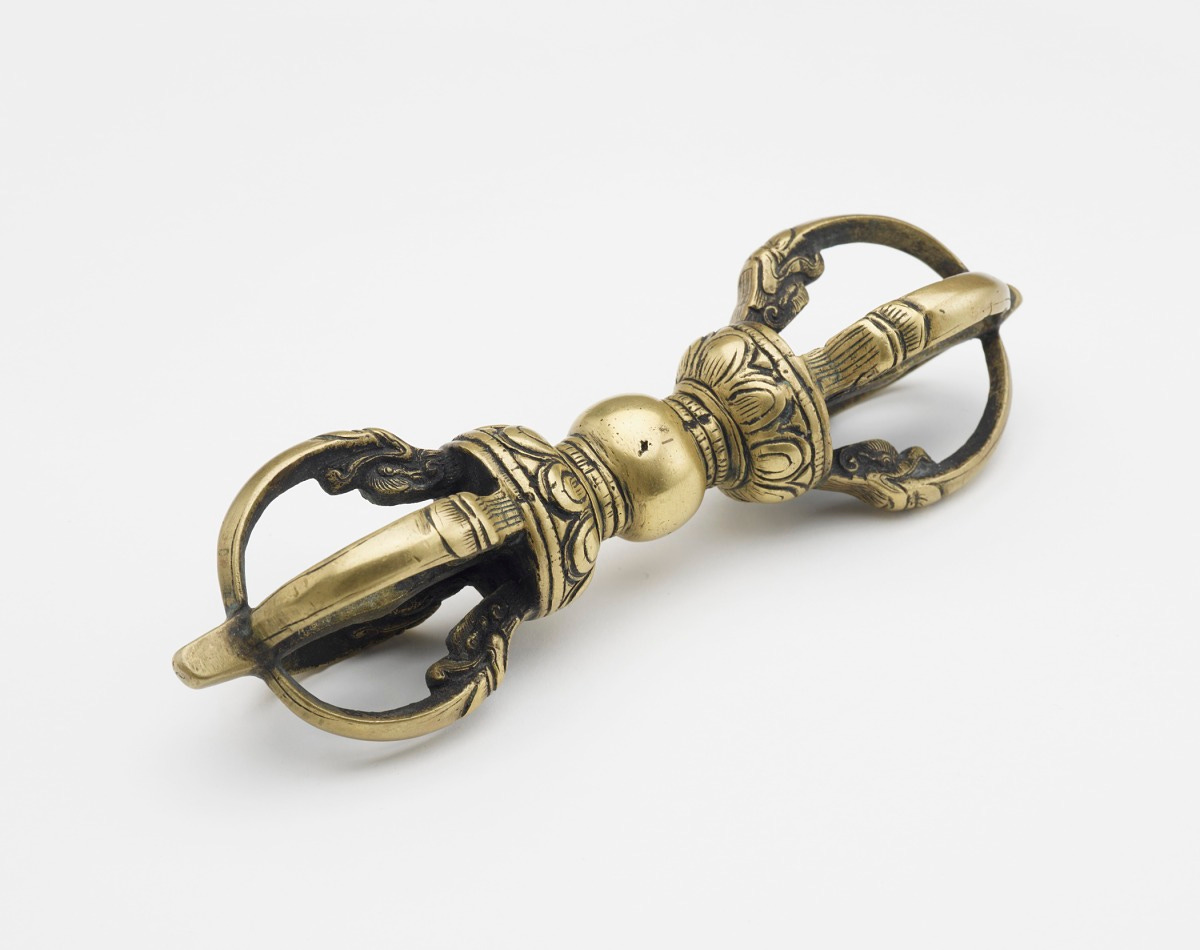
OM AH HUNG is the basic or seed mantra of Indo-Tibetan Vajrayana (“Thunderbolt” or “Diamond”) Buddhism, and the foundation for all mantras. The core Tantric principle is that all people have the potential for instantly experiencing full awakening (aka “enlightenment”).
Tantra views the human body as divine. A sexual connection between a man and woman represents the divine union of Shiva (male deity) and Shakti (female deity). Imbuing sexuality with higher consciousness is seen as a path to liberation. There are a number of tantric practices that can be undertaken by couples, as this guided meditation suggests. They typically involve:
Eye-gazing with your partner.
Synchronized slow breathing.
Mind-calming and centering attention in the present moment.
Reverence and gratitude for your amazing partner.
Sensing your own and your partner’s energy.
Fusing and circulating the merged energies as a unified field.
Experiencing dissolution of the illusion of separation.
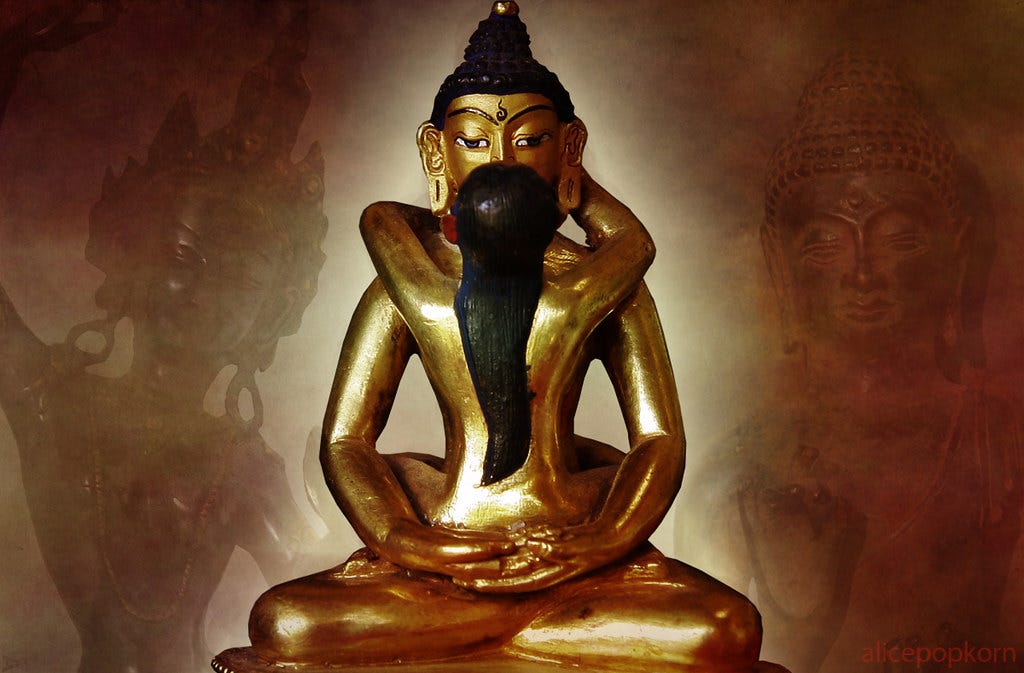
The tantric approach to lovemaking transforms ordinary sexuality into a vehicle through which partners are able to experience transcendent states of consciousness. The modern expressions of sacred sexuality translate the wisdom of ancient tantric traditions into contemporary language and more accessible practices.

A Tantric Tale
According to the Tantric interpretation of the Hindu story about Lord Krishna simultaneously making love to all the gathered milkmaids, Krishna represents Pure Consciousness (atman). His many female consorts symbolize the myriad energies, thoughts, feelings, and desires of people’s individual souls. The milkmaids’ divine dances with Krishna symbolize the spontaneous interplay of consciousness and its matter/energy manifestations, as expressed through ecstatic harmony.
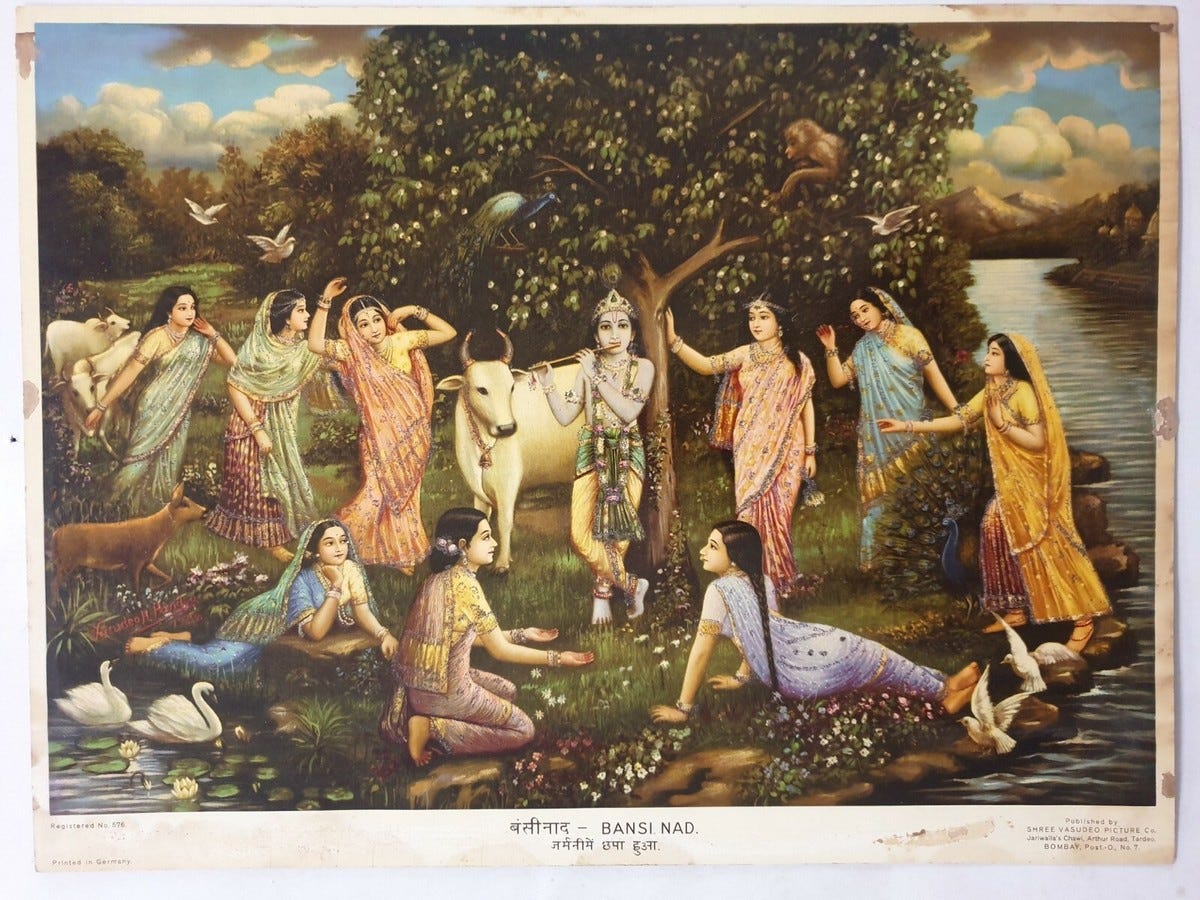
In Tantra, the erotic and the spiritual are not separate. Tantric sexual imagery depicts the merging of subject and object, lover and beloved, bringing about a dissolution of illusory dualities. When Krishna multiplies himself so that each milkmaid feels him making love to her alone, this represents consciousness being equally present in every form of experience, while remaining as one undivided whole.
What superficially appears to be an erotic tale is actually a mystical pedagogy, teaching how the sensual can be transmuted into the spiritual when suffused with sufficient awareness. The ecstatic dances represent the cosmic play of the Shakti and Shiva deities, with their sexual union mirroring the merging of polar opposites and the ecstatic experience of non-dualistic reality. The spiritual bliss (ananda) of the milkmaids comes from their complete surrender to love, which brings the realization that they are not separate from their divine nature.
The flute that Krishna uses to enchant the milkmaids symbolizes the prime energy channel of the body (susumna), connecting its energy centers (chakras). Awareness of the breath (prana) that flows through the flute produces the music of divine awareness, awakening the transformational (kundalini) energy that pushes one’s essence toward its divine source.
The story is mystical, not moralistic. It portrays the ultimate Tantra, where all desires and pleasures, when directed toward a higher purpose, become a path to psycho-spiritual Liberation. By transforming the excitement of our passion into a more deeply felt compassion, and our sensual delights into spiritual bliss, our experience of making love becomes the same as that tasted by the most adept practitioners of deep meditation; the ecstasy of Pure Being (bodhi), completely immersed in the fleeting yet ever-present moment of the here and now.
Dzogchen
The Dzogchen traditions of Tibetan Buddhism employ practices that help people experience non-dual, non-conceptual, non-verbal knowledge of their primordial state of pure awareness, known as rigpa. That is our original mind, before acquisition of language and the veil of illusions created by linear thinking.

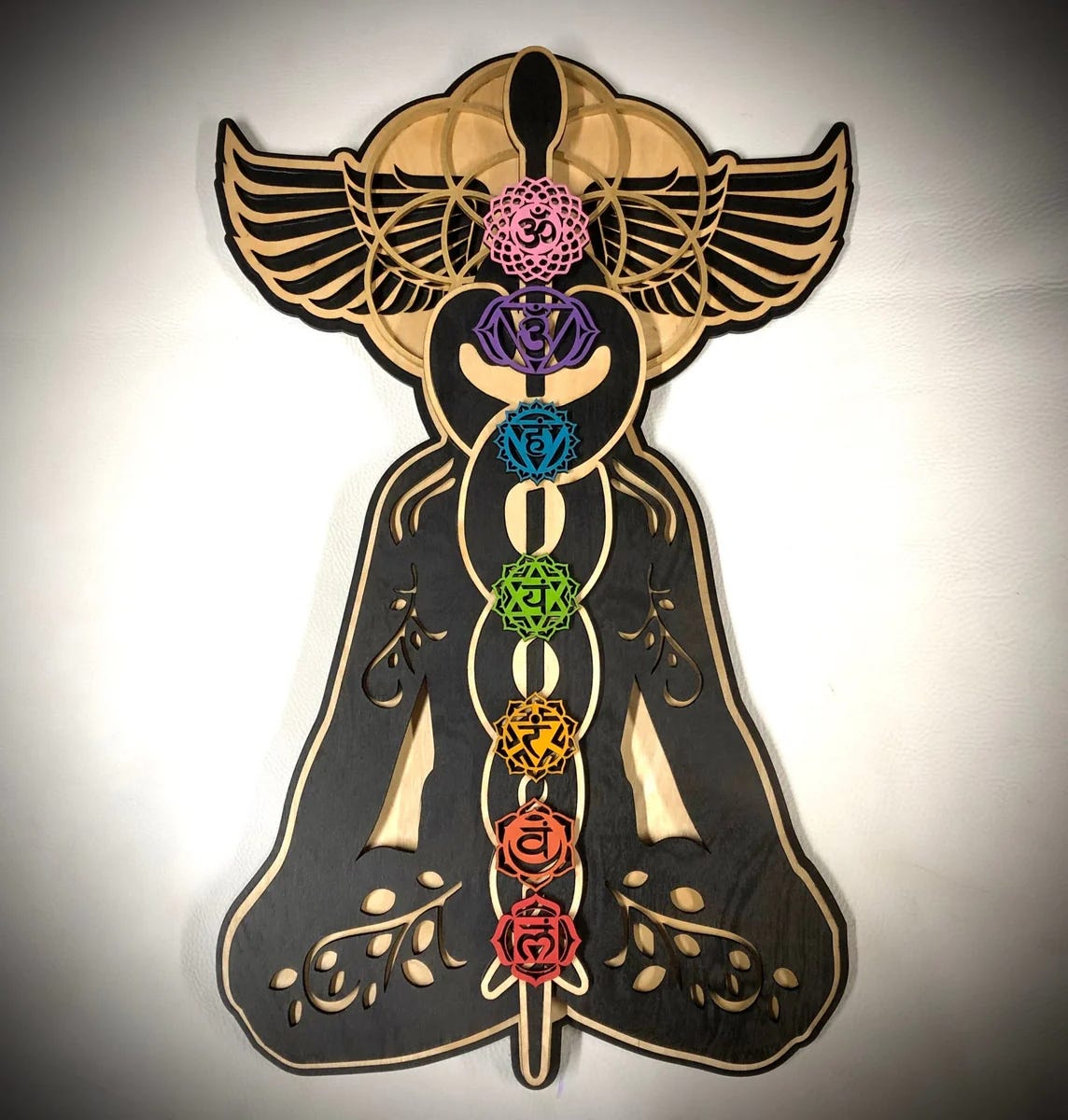
Dzogchen’s practices include the use of mantras (numinous sounds) and yantras (geometric symbols) as objects of meditation. Tantric practices allow the worldly enjoyment of pleasures that facilitate awakening the kundalini (the potential energy for creating higher consciousness) and activating the chakras (energy centers). The crown chakra, visualized as a thousand-petaled lotus, is said to be where the spirit leaves the body at death, or during a temporary out-of-body experience. The purpose of raising kundalini to the crown chakra is to enable the experiencing of nirvana (a state in which there is a complete cessation of all suffering).
Mantra Chanting
The vibrations produced by chanting OM are said to represent the essence of physical forms such as the body and its associated sensations. Its expression facilitates attaining a higher wisdom that lies beyond appearances. Similarly, AH represents the essence of all vocalizations, and its vibrations allow us to explore silent, open emptiness, and experience nothingness. HUNG represents the essence of mind, in which we are aware of thoughts, the impact of emotions, and mental constructs such as perceptions. Its vibrations encourage the union of form and emptiness.
Sitting with this mantra, either listening to it while consciously breathing, or chanting it, can help clarify our intentions and elevate our consciousness. Our higher consciousness can then be expressed through our physical activities, the things that we say, and how we think and feel.
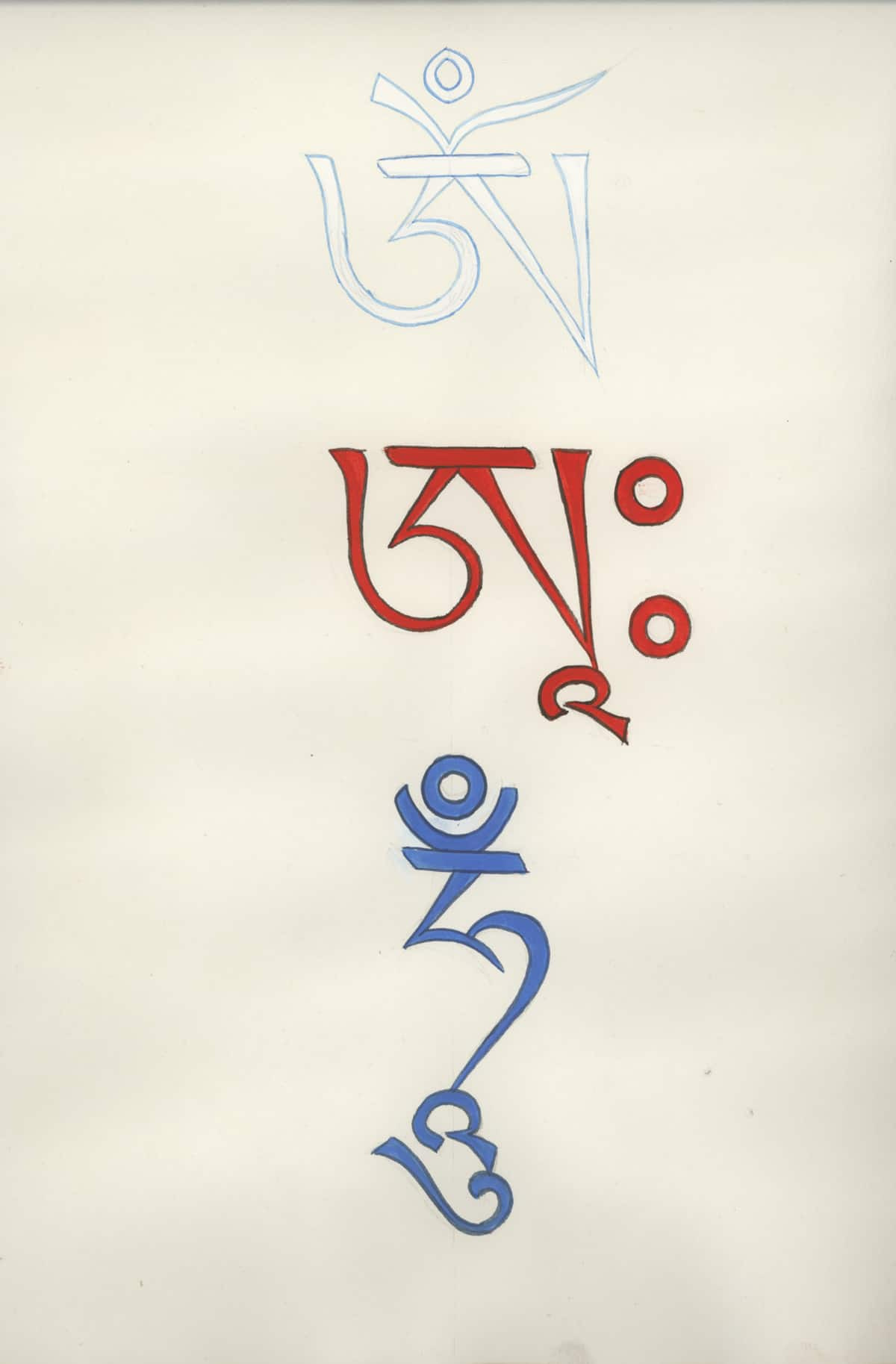
In Tantric Buddhism, OM AH HUNG is considered a powerful formula for clearing, purifying, and aligning the body, speech, and mind. Its Sanskrit symbols emphasize the sacredness of each aspect of the holy trinity. OM purifies the body, AH purifies the speech, and HUNG purifies the mind.
Solo Tantric Meditation
While listening to this recording, inhale for four seconds, feel the vibration of the OM, and visualize a white light radiating from the center of your head directly behind your “third eye” (sixth chakra; seat of clarity). Then, hold your breath for four seconds, feel the vibration of AH, and visualize a red light radiating from your throat (fifth chakra; seat of honesty). Next, while exhaling for four seconds, feel the vibration of HUNG, and visualize a blue light radiating from your heart (fourth chakra; seat of compassion).
After listening to the chanting for a while, begin breathing in synchrony with the mantras. When you feel ready, begin chanting along with the monks for as many times as you would like. When you have done this for about 10 minutes, stop the recording and notice if your body feels relaxed, and if your mind has come to rest.
Vajra Guru Mantra
This is a more advanced mantra that you may eventually want to explore:
“OM AH HUM VAJRA GURU PADMA SIDDHI HUM” (Sanskrit).
“OM AH HUNG BENZA GURU PEMA SIDDHI HUNG” (Tibetan).
In case you’re wondering why I feel at liberty to share this esoteric knowledge in a simplified form, and in a manner that does not require the presence of a teacher (guru). The Tibetan name, “Karma Dondrup,” meaning “Wish Spontaneously Accomplished” or “Accomplishment of Action” was bestowed upon me by the venerable Lama Tenzin, after I spent a weekend meditating with him at the Maui Dharma Center.
I have no clue as to why he chose that name, but it is my wish that anyone who chants these sacred syllables will experience at least a glimpse of their beautifully radiant, naturally unfettered mind, revealed in all its glory. I hope that you’ll enjoy exploring the Tantric meditations, and through them find peace and wisdom.